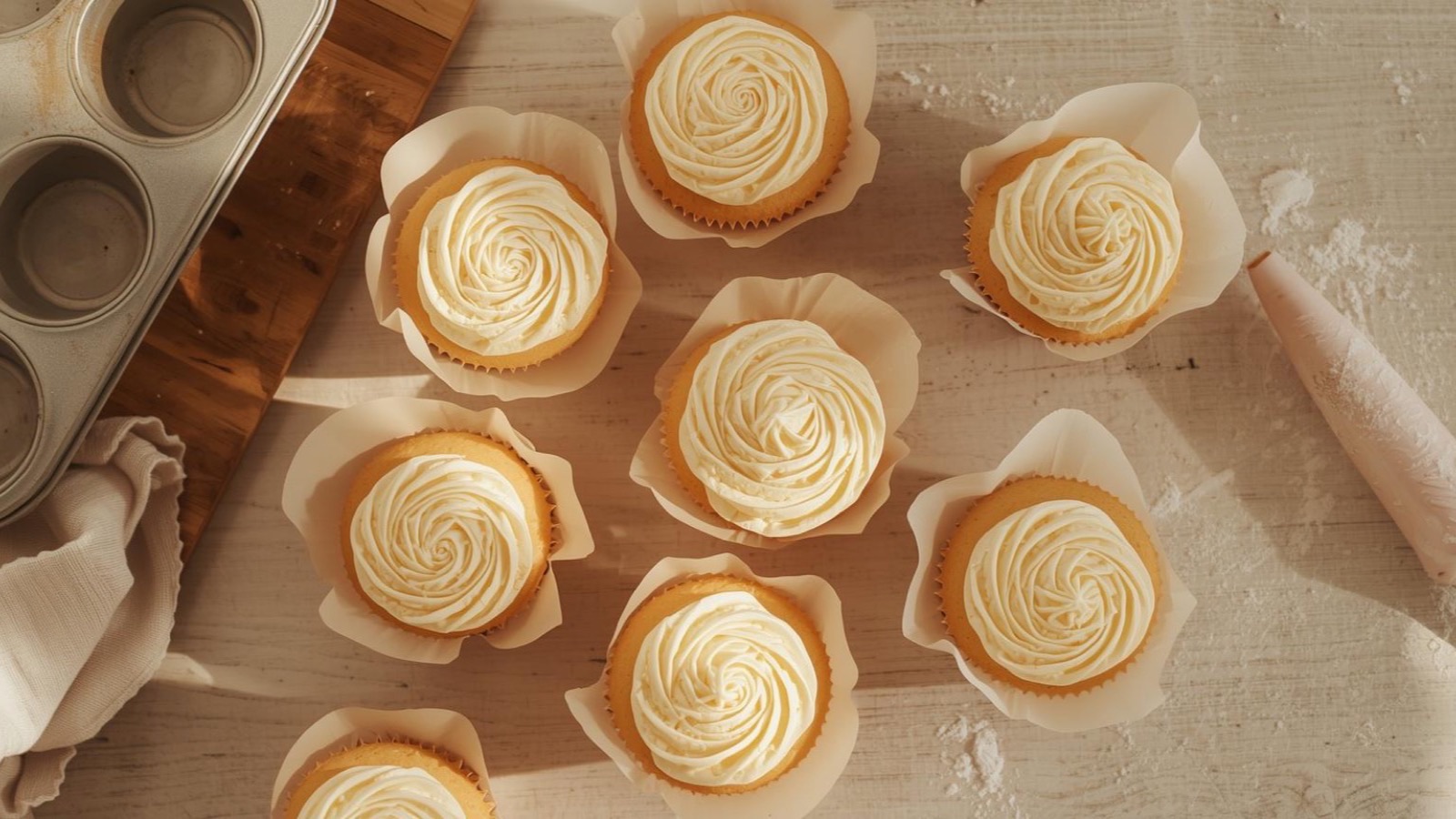
Twelve cupcakes, beautifully piped, sat in a clear box. The woman at the school fair asked how much. You said “twenty pounds” — because that’s what felt fair, and it sounded like a nice round number that wouldn’t make her flinch.
That’s how most UK home bakers price their cupcakes. Not because they’re careless, but because nobody ever showed them what a box of 12 actually costs to make. This guide is about how much to charge for cupcakes in the UK without losing money on every batch — using a box of 12 vanilla cupcakes with buttercream as the worked example, and walking through what to charge across the channels you’re most likely to sell through.
By the end you’ll know your floor price, the margin you should aim for, and what to do when someone tells you your cupcakes are too expensive.
- A box of 12 cupcakes takes about 60 minutes of your time — 40 minutes baking and piping, plus 20 minutes on clean-up, boxing, and customer admin
- The full cost of a market-quality box of 12 plain cupcakes is around £21, not £6
- Selling that box at £20 isn’t a thin margin — it’s barely break-even, with nothing left for wastage, a butter rise, or the batch you burn
- Make three batches in one session and your labour-per-box drops by a third, which is what makes cupcake selling viable
Why most UK cupcake sellers underprice
Three patterns show up over and over.
You compare yourself to a supermarket six-pack. Tesco do six cupcakes for £3. Yours is a box of 12 at £20 and you feel like you’re charging “too much.” But the supermarket cupcakes were made by a machine in a factory at thousands of units an hour. Yours took an afternoon of your time. They are not the same product, and they should not be the same price.
You round to a friendly number. £20 sounds polite. £25 sounds steeper. So you say twenty without ever checking what the box actually cost you. You don’t know your cost base, you don’t know your margin — you’ve just picked a number that doesn’t make a customer flinch. That’s not pricing. That’s hoping.
You forget the icing takes as long as the cake. A plain batch of 12 piped cupcakes is about 60 minutes from start to finish — around 40 minutes for the actual bake and pipe, plus 20 minutes on clean-up, boxing, and the Instagram messages coordinating pickup. Themed work — character toppers, two-tone colours, sprinkles, personalised tags — can add another 45 minutes on top. Most home bakers price the cake but forget that the icing is half the labour.
The three numbers every cupcake price needs
Every defensible cupcake price is built from three components. Skip any of them and you’ll undercharge.
1. Your real cost per batch — ingredients, your time, and a share of your overheads (cupcake boxes, energy, insurance, market pitch fees). Ingredients are the easy bit. Time is what people miss. Overheads — especially packaging — matter more for cupcakes than for cakes because every box has its own materials adding up. The full guide on how to cost a recipe walks through the maths in detail.
2. Your target margin — the difference between cost and selling price, expressed as a percentage of the price. 40% is a solid baseline for direct sales (markets, home pickup, custom orders). For platform sales — Etsy, anywhere that takes commission — aim for 55-60% so the fees don’t eat your margin to nothing.
3. Your channel adjustment — different selling channels have different cost layers. A direct market sale is just you and the customer. A custom party order might include delivery. Wholesale to a coffee shop means selling at trade price (40-50% below retail). Same box of 12, three different prices — and they’re all correct.
The formula:
Selling price = total cost ÷ (1 − target margin)
For a £21 box at 40% margin: £20.86 ÷ 0.60 = £34.77, round to £35 for a clean number.
That’s the floor for direct sales — the lowest price you can charge before you start losing money on the batch. Anything below it and you’re effectively paying the customer to take the cupcakes away.
Now we’ll work through it with real numbers.
Worked example: pricing a box of 12 cupcakes
A standard box of 12 vanilla cupcakes with vanilla buttercream piping. Made one batch at a time in a home kitchen.
So far the price feels easy — £6.45 of ingredients, sell for £20, make £13.55, right? No.
Now add your time. Mix, fill cases, bake, cool, pipe the buttercream — that’s about 40 minutes of active baking. Then the commercial bits most bakers forget: clean-up, boxing, labels, and the Instagram DMs coordinating pickup — another 20 minutes, minimum. Call it 60 minutes per batch if you’re not rushing. At the National Living Wage of £12.71 per hour, that’s £12.71 of labour in one batch.
Then add overheads — the cupcake box (£1.00), gas and electric for the oven (~£0.50), and your share of insurance, market fees, and other fixed costs (£0.20 per batch if you make 100 batches a month). About £1.70 per batch.
Twenty-one pounds. Not six. If you’ve been selling boxes of 12 plain cupcakes at £20 — which is the price most home bakers default to — you’ve been barely breaking even. Zero margin for the batch you burn, the butter that went up 19%, or the packaging you’ll need to replace. The labour is what most people miss.
For a 40% margin on a £21 batch, the sell-at price is £34.77 — round to £35 for a clean number. Per cupcake that’s £2.90, which feels reasonable next to a high-street cupcake at a comparable price.
Now try it with your own batch. The widget below starts pre-filled with the box-of-12 vanilla cupcake numbers as a worked example — edit any field (your real ingredient cost, your time per batch, your hourly rate, your overheads, your margin) and the sell-at price updates as you type. If you want to see how much you’re currently making or losing, drop your real selling price into the bottom field.
Calculate your own batch
Edit any field — values save only when you email yourself the breakdown.
If you change the batch size, update the ingredient cost to match — the widget divides by batch size rather than scaling ingredients.
UK National Living Wage (2026) is £12.71/hr. Many established bakers use £15-£20.
Covers packaging, energy, insurance and market fees.
40% direct · 55-60% Etsy · 50% wholesale.
This is one recipe. Most food businesses sell 10+. Every time butter goes up 20p, you'd rebuild this calculation by hand — for every product. The Food Costing Toolkit recalculates every recipe automatically when one ingredient price changes. £79, one-time.
That’s the price your numbers say. We’ll come back to whether the market will pay it.
Where the maths starts to work
If a single batch of 12 plain cupcakes costs £21 to make, the obvious question is: how does anyone sell cupcakes profitably?
Three answers.
Batch your bakes. Most of that £12.71 labour cost is fixed setup — kitchen prep, weighing out, cleaning down. Do three batches in the same session, baking two trays at a time on different shelves, and the whole thing runs in about 2 hours instead of three separate hours. You’re prepping ingredients once, cleaning the kitchen once, and the oven does most of the scaling for you. That drops your labour from £12.71 per batch to about £8.47 (40 minutes each at £12.71/hr). Total cost falls from £21 to about £17, and a £30 selling price clears a 40% margin comfortably.
Same box, same ingredients, same 40% margin target — your floor price drops by around £7 a box, which is where “I can charge £30 comfortably” actually comes from.
Decorate them properly. A plain piped cupcake is hard to charge £40 a dozen for because customers can compare it to a supermarket cupcake. A box of 12 themed cupcakes — character toppers, two-tone buttercream, sprinkles, age numbers, a personalised tag — is a different product. £45-£70 is normal in the UK for themed dozens, and most of the extra price is margin, not extra cost. The Custom Order Quote Sheet, a standalone companion to the toolkit, is built specifically for this kind of pricing.
Take custom orders for events. Birthday boxes, baby showers, hen do orders, corporate gifts. The customer is paying for “you’ve made this for me” — not just the product. £55-£80 for a themed dozen with personalised toppers is a reasonable ask once you’ve got a portfolio of past work to point at.
The pattern: the maths works when you’re not making one batch at a time for one casual buyer. The moment you batch, theme, or take custom orders, your labour-per-cupcake drops and your price-per-box holds.
Cupcake prices in the UK — 2026 benchmarks
What customers actually pay in 2026, for context. These are the ranges to aim within — not a ceiling.
| Cupcake type | Direct / market | Custom / themed | |---|---|---| | Box of 6 plain (vanilla, chocolate) | £8-£14 | n/a | | Box of 12 plain (vanilla, chocolate) | £18-£28 | n/a | | Box of 6 decorated (piped, sprinkled) | £14-£22 | £20-£35 | | Box of 12 decorated (piped, sprinkled) | £25-£42 | £35-£60 | | Box of 12 themed (character, two-tone, age numbers) | n/a | £45-£75 | | Single cupcake at market | £2.50-£4.00 | n/a |
If your prices are at the bottom of these ranges and your costs aren’t lower than average, you’re underpricing. If they’re above the range, you need a story — better ingredients, better design, better service — to justify the gap. The numbers are a starting point, not a rule.
What to say when customers say your cupcakes are too expensive
When you raise your prices, you’ll hear it. Three short replies that work without losing your nerve.
“That’s a lot for cupcakes.”
“I understand — these are made fresh to order, with real butter buttercream and free-range eggs, and a dozen takes me about an hour from bake to box. The price reflects what it actually costs to make properly.”
You’re not arguing. You’re explaining. Most people who say “too expensive” don’t actually walk away — they just want to know why.
“I can get a pack from Tesco for £3.”
“You absolutely can — and a supermarket cupcake is a great option for a casual treat. What you get from me is a box made fresh today, decorated by hand, just for you. If that’s not what you need today, no worries at all.”
Acknowledge the alternative, name the difference, leave the door open. Don’t apologise.
“Can you do a box of 12 for £15?”
“Not for that one I’m afraid — at £15 I’d be losing money on the batch. If a box of 6 or something simpler would work for you, I can put a price on that for you.”
This is the one that takes practice. You’re not negotiating down — you’re offering a different option at a different price. People respect the line.
The thing to remember: your price is set by your cost and your margin, not by the customer’s budget. If the customer’s budget doesn’t fit your cost base, the answer is “this isn’t the right fit for you” — not “I’ll charge less and lose money to keep your business.”
Common questions
How much should I charge for a box of 12 cupcakes in the UK?
What margin should I aim for on cupcakes?
How much should custom or themed cupcakes cost?
Is it legal to sell cupcakes from home in the UK?
What do I say when someone says my cupcakes are too expensive?
Price every product properly.
Stop guessing what to charge. The Food Costing Toolkit works out every cost that goes into your products — ingredients, labour, overheads, margin, and platform fees — across six connected spreadsheets. Update one ingredient price and every recipe that uses it recalculates automatically.
Get Price It Right — £79One-time purchase · no subscription · PDF guide included